Commercial kitchens in Texas: who checks what
- Pick what you need and give your kitchen's ZIP code.
- Each service goes to the number of local companies you choose, from one to five. We check licenses where the law requires one and email you their names.
- You talk with them and decide. You hire and pay the company directly.
Facts checked 2026-11-02.
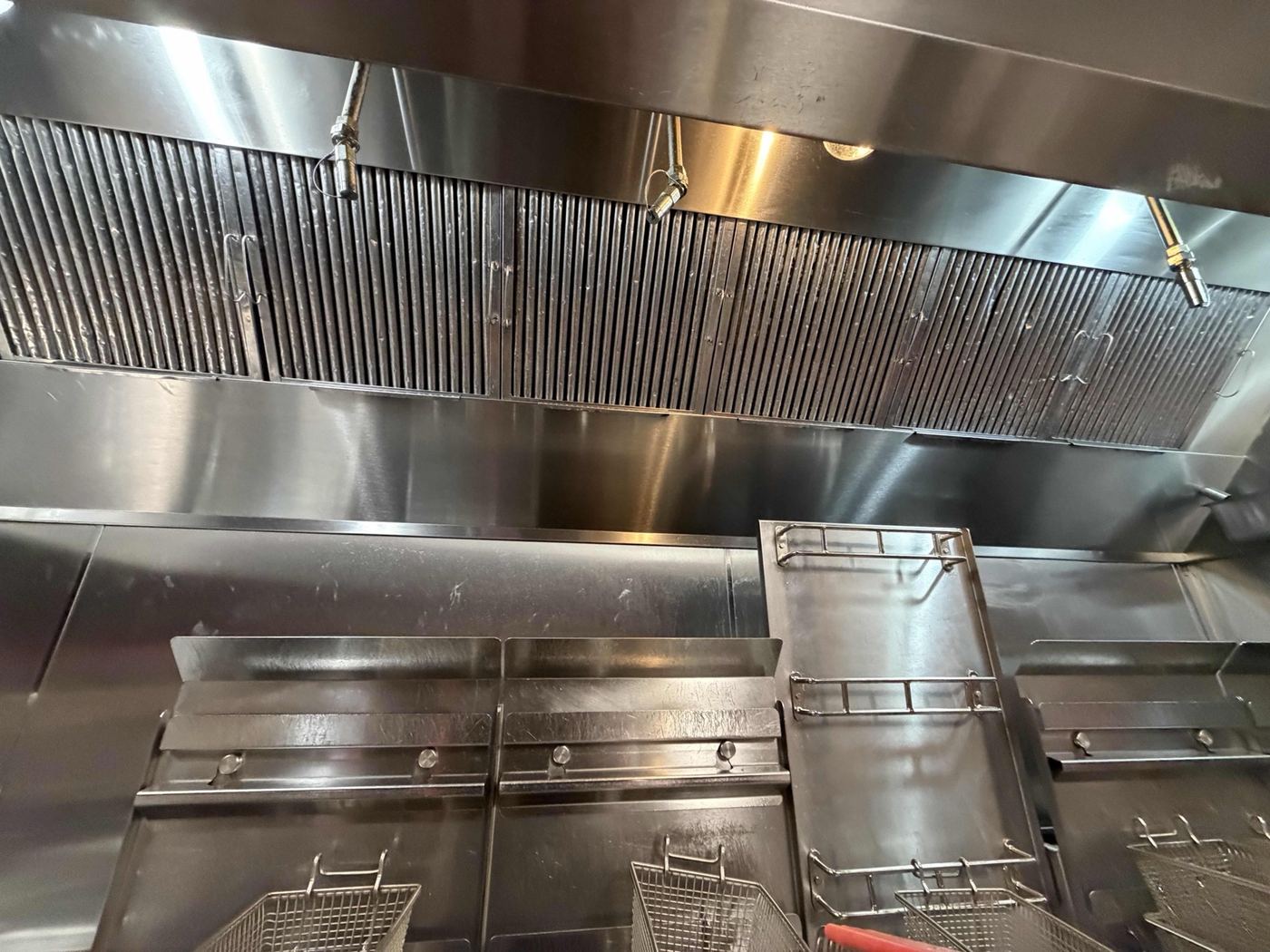
A Texas restaurant kitchen answers to several offices, and which ones depends on the city. Texas has no single statewide fire code. Each city decides which edition of the fire code it enforces and what it changes. Texas Commercial Kitchen 101 explains who checks what, then connects you with a local company, licensed where the law requires it. It does not do the work itself.
Who checks what
- Fire. The local fire marshal inspects the kitchen and enforces the fire code the city adopted. The state fire marshal's office, part of the Texas Department of Insurance (TDI), licenses the companies and technicians that service extinguishers and kitchen fire systems.
- Health. A food permit comes from the city, county or public health district. The state health department (DSHS) permits restaurants only where no local health department does.
- Building and mechanical. The city permit office reviews plans and permits the hood and exhaust work. Houston, for example, inspects commercial kitchen hoods through its Mechanical Inspections section.
- Grease. The city or its wastewater utility sets the grease trap rules. The Texas Commission on Environmental Quality (TCEQ) registers the haulers that pump grease trap waste.
- Used cooking oil. DSHS, not TCEQ, regulates the transport of used fryer oil.
How often each job comes around
| Job | The interval to know | Who decides |
|---|---|---|
| Kitchen fire suppression system | Inspected and tagged at least every 6 months in Houston; Gainesville also asks for 6 months | Local fire marshal |
| Hood and duct inspection for grease | NFPA 96 table: monthly for solid fuel, quarterly for high-volume cooking, twice a year for moderate, yearly for low-volume | Local fire marshal |
| Class K extinguisher | Inspected and tagged yearly in Houston | Local fire marshal |
| Grease trap | Every 90 days in Houston, unless the city approves a waiver; Dallas's poster says every 90 days or at 25% full | City or utility |
| Used cooking oil | No state interval found; ask the collector | Contract |
| Health inspection | Set by the health department by risk class | Local health department |
Check your own city before you plan around any row, because the edition of the code can change at the city line.
Building a new kitchen
The order differs by city.
- Ask the health department whether it wants plans. The state food rules let the department require plans for new construction, conversions and remodels.
- Prepare plans that list each piece of equipment with its maker, model, location and capacity.
- Get the city permits. In Houston a replacement or new kitchen ventilation system needs a mechanical permit and inspection. In Dallas the fire permit schedule has a line for commercial cooking fire-extinguishing systems.
- Plan the grease trap early. Dallas asks for a grease interceptor submittal with the plans. The state's model rule for cities has the trap in and inspected before the certificate of occupancy, but each city decides.
- Expect a pre-opening inspection. The health authority may check that the kitchen was built as the approved plans show.
- If you will serve alcohol, the Texas Alcoholic Beverage Commission issues those licenses and permits separately.
The opening a restaurant guide goes through these steps with the sources.
Choose the jobs on the form and enter a Texas kitchen ZIP code, and each job goes to the local companies that do that work, as many as you choose (one to five).
Eating places in Harris and Dallas counties
Harris County and Houston had 8,410 restaurants and other eating places in 2025, up from 7,600 in 2019. Dallas County and Dallas had 5,533, up from 5,253. Across Texas the count grew from 44,743 to 52,862 over the same years. These are Bureau of Labor Statistics counts of locations with employees, not of companies.
Not legal advice
These pages summarize public rules and say where each came from. They do not replace the agency that decides. When a page says to ask the fire marshal or the permit office, that is who gives the final answer for your address.
Guides
Places
Buying kitchen equipment
Questions
Does Texas have one fire code for restaurants?
No. A 2015 TDI order says the State Fire Marshal's standards for its own inspections do not apply where a local government has adopted fire rules. Ask your city's fire marshal which edition applies.
Who licenses fire suppression and extinguisher companies in Texas?
The State Fire Marshal's Office at TDI. It licenses individual technicians and registers the companies they work for. Ask the company for its TDI registration and the technician for a license number, and check them with TDI.
Who permits a restaurant to open?
The local health authority issues the food permit. DSHS does it only where no local health department exists. The city permit office handles building and mechanical permits.
Sources
- TDI fire industry licensing
- TDI Commissioner Order 4015 (2015), State Fire Marshal inspection standards
- TCEQ RG-389, Grease trap waste
- TCEQ model FOG standard
- DSHS Retail Food Establishments
- 25 TAC 228.241, plans
- 25 TAC 228.243, preoperational inspections
- Houston LSB Standard 02, inspection and testing of fire protection equipment
- Gainesville fire safety inspection
- NFPA 96 inspection schedule as printed in the 2025 California Mechanical Code 514.3
- Houston Mechanical Inspections
- Dallas Fire-Rescue schedule of permit fees
- Houston Health Department, special waste generators
- Dallas grease trap and interceptor poster
- Dallas grease interceptor submittal guidelines
- TABC
- BLS QCEW, NAICS 7225, 2025
- BLS QCEW, NAICS 7225, 2019