- Pick what you need and give your kitchen's ZIP code.
- Each service goes to the number of local companies you choose, from one to five. We check licenses where the law requires one and email you their names.
- You talk with them and decide. You hire and pay the company directly.
Facts checked 2026-11-02.
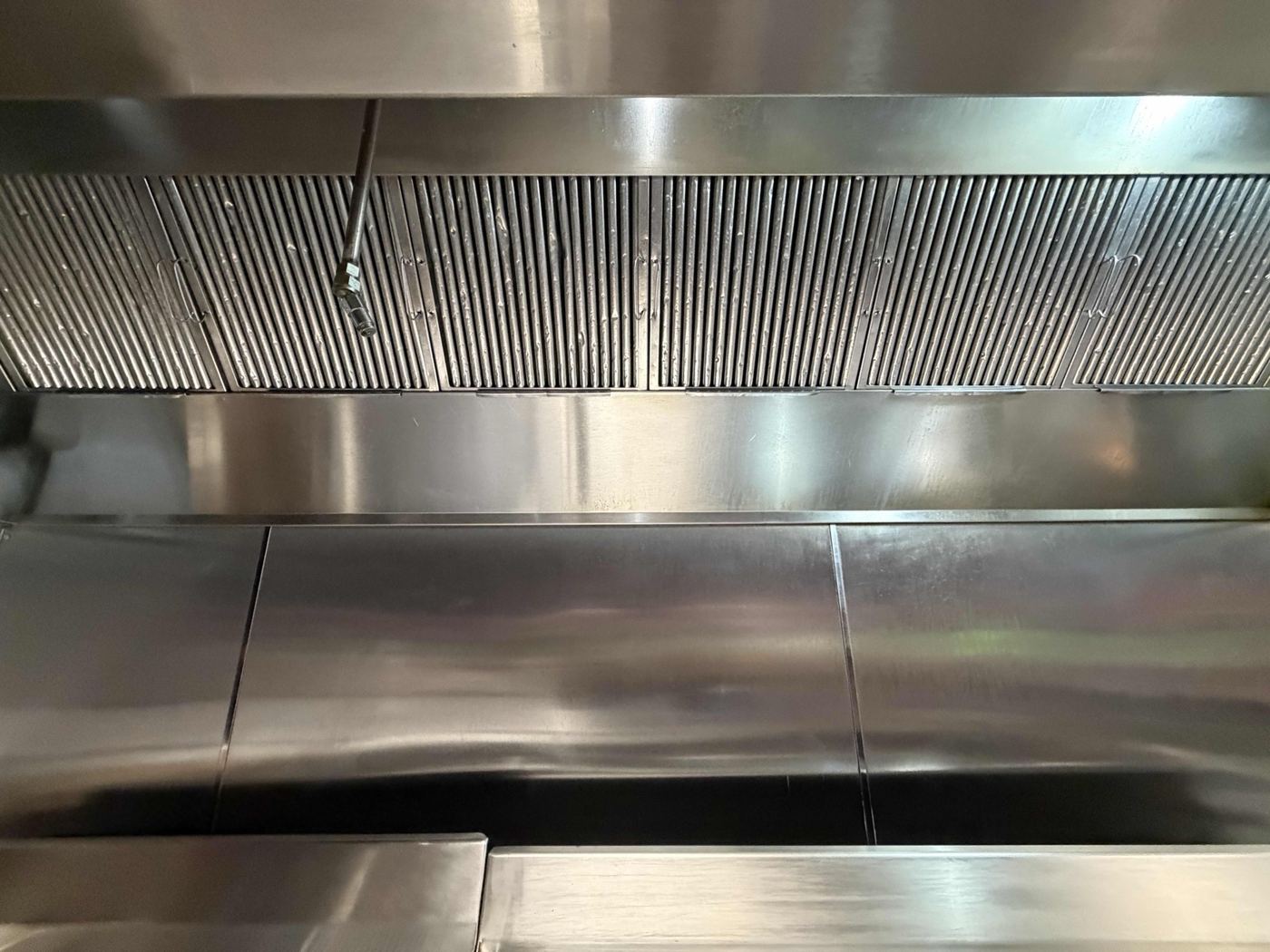
Hood and duct cleaning is not on the Texas Department of Insurance's list of the fire industries it licenses, and we found no other state license for it. The rules that matter come from the national standard, NFPA 96, and from the fire marshal in your city.
Who decides
The state fire marshal's licensing covers alarms, fire extinguishers, sprinklers and fireworks. Hood cleaning is not one of those, so the decision falls to the local fire marshal, who is the authority having jurisdiction under NFPA 96. The standard asks for inspections by a trained, qualified, certified person acceptable to that authority. In practice, your city's fire marshal's office is the one to ask whether a given cleaner is accepted.
Industry groups such as IKECA offer certifications for exhaust cleaners. NFPA 96 leaves it to the local authority to say which credentials it accepts.
How often the exhaust system is checked
NFPA 96 sets how often a kitchen exhaust system is inspected for grease buildup. The schedule depends on what you cook and how much.
| Type of cooking | Inspection |
|---|---|
| Solid fuel cooking | Monthly |
| High-volume cooking, such as 24-hour cooking, charbroiling or wok cooking | Quarterly |
| Moderate-volume cooking | Twice a year |
| Low-volume cooking, such as churches, day camps, seasonal businesses and senior centers | Yearly |
This table is NFPA 96's, as reprinted in California's 2025 mechanical code. Texas licensing rules adopt the 2021 edition of NFPA 96 (check TDI for later changes). Your city may use a different edition or add its own rules, so confirm with the fire marshal.
The Houston Fire Department's standard says commercial kitchen vent hoods, exhaust ducts, exhaust fans and their parts must be cleaned and inspected by approved personnel as often as needed to prevent excess grease buildup. Houston does not set a fixed number of months for cleaning in that standard, so the amount of grease decides.
A local company can take it from here. One form, free for restaurants.
Get connectedWhat cities add
Local rules can be tighter than the table. Gainesville's fire safety inspection page says that where a kitchen has a fire suppression system, the system gets a third-party inspection and the hood is cleaned every 6 months.
Houston's standard puts the hood and the suppression system in the same section but treats them as separate duties. The system is inspected and tagged at least every 6 months, and the hood is cleaned as often as grease requires. Who may do the suppression work is covered in the suppression guide.
What the health inspector looks at on a hood
The Texas food rules adopt the 2017 FDA Food Code. It asks that grease filters be designed to be readily removable for cleaning, unless they are cleaned in place. It also asks that hoods be designed so grease or condensation does not drip onto food, equipment or utensils. A health inspector can write up a dripping hood even when the fire marshal has no complaint.
Choosing a cleaner
Because there is no state license, you have to ask more questions than you would for fire suppression work.
- Does your fire marshal accept this company or its certification?
- Does the company carry the insurance your landlord or insurer asks for?
- Will it give you a written record of what was cleaned and what could not be reached?
- Does it work around your suppression system, or does it expect you to hire a separate technician?
Ask the fire marshal's office what record it wants to see at an inspection.
A hood and exhaust cleaning request from a Texas kitchen goes through the form to the local companies that clean hoods, as many as you choose (one to five).
Questions
Does a hood cleaner need a license in Texas?
Not from the State Fire Marshal's Office. Its licensing list does not include exhaust cleaning. A city may have its own rules, so ask your fire marshal.
How often should a restaurant hood be inspected and cleaned?
NFPA 96 sets inspection for grease monthly for solid fuel cooking, quarterly for high-volume kitchens, twice a year for moderate volume and yearly for low volume. Gainesville asks for hood cleaning every 6 months where there is a suppression system. Cleaning follows when an inspection finds grease. Houston says to clean as often as needed to prevent excess grease.
Who decides which hood cleaning companies are acceptable?
The local fire marshal. NFPA 96 asks for a qualified person acceptable to the authority having jurisdiction.
Sources
- TDI, fire industry licensing
- 28 TAC 34.507, standards adopted for state licensing
- NFPA 96 inspection schedule as printed in the 2025 California Mechanical Code 514.3
- Houston Fire Department LSB Standard 02, section 2.9.1
- Gainesville fire safety inspection
- IKECA frequently asked questions
- FDA Food Code 2017, sections 4-202.18 and 4-204.11
- 25 TAC 228.1, Texas adoption of the Food Code