Home › Guides › Opening a restaurant in Texas
Opening a restaurant in Texas: permits and inspections
- Pick what you need and give your kitchen's ZIP code.
- Each service goes to the number of local companies you choose, from one to five. We check licenses where the law requires one and email you their names.
- You talk with them and decide. You hire and pay the company directly.
Facts checked 2026-11-02.
In Texas, the food permit for a restaurant comes from the local health authority, which is the city, county or public health district. The Department of State Health Services (DSHS) issues it only where there is no local health department. Fire, building and wastewater approvals come from separate city offices, and the order differs from city to city.
Who issues what
| Approval | Who issues it | Where to start |
|---|---|---|
| Food establishment permit | City, county or public health district; DSHS where none exists | The health department for your address |
| Plan review for construction or remodel | The health authority, if it requires plans | Same office |
| Building, mechanical and plumbing permits | The city permit office | City permit center |
| Fire permits and inspections | The local fire marshal | City fire marshal's office |
| Grease trap or interceptor | City or wastewater utility | Utility or plumbing plan review |
| Alcohol | Texas Alcoholic Beverage Commission (TABC) | TABC licenses and permits |
DSHS has an online jurisdiction map for finding the health department that covers an address.
The state food rules
The state food rules are 25 TAC chapter 228, known as the Texas Food Establishment Rules. They adopt the 2017 FDA Food Code with listed exceptions. Where Texas law and the chapter conflict with the Food Code, Texas wins. Local health departments enforce the rules in their areas.
A city can add its own ordinance, but state law now limits that. A city may not inspect to an ordinance that differs from state law or DSHS rules until 60 days after it files the ordinance with DSHS. Local fee schedules also go to DSHS 60 days before they take effect. DSHS keeps a public registry of both. Houston's health department says that from September 1, 2025 it adopts the FDA Food Code and the state rules by reference, repeals its own food ordinance and follows the DSHS fee model.
A local company can take it from here. One form, free for restaurants.
Get connectedPlans
The food rules allow the health authority to require plans for building a food establishment, converting a structure to one, or remodeling one. The Food Code says the plans must be submitted before work begins. They include:
- the intended menu
- the expected volume of food stored, prepared and sold
- the layout and mechanical schematics
- a list of equipment with its type, maker, model, location and capacity
Call the health department before you sign a lease or order equipment. It can tell you whether it wants plans for your project.
The pre-opening inspection
The health authority may do one or more pre-opening inspections. They check that the kitchen was built and equipped as the approved plans show. Houston's health department says its specialized inspection section checks plans for new and remodeled places and does pre-operational inspections.
What the permit costs
Where DSHS is the permitting authority, the fee depends on the restaurant's gross annual food sales. DSHS lists $258 for sales under $50,000, $515 from $50,000 to $149,999.99, and $773 for $150,000 or more. Cities that issue their own permits publish their own fee schedules. Organizations inspected and permitted by a city, county or public health district do not also need the DSHS permit.
Fire and building
Texas has no single statewide fire code, so most of this part is local. The city decides which edition of the fire code applies and what it changes. Houston uses the 2021 International Fire Code with Houston amendments. Dallas uses the 2021 International Fire Code with Dallas amendments. Both cities also adopted mechanical and plumbing codes with local amendments.
For a kitchen, the pieces that most often need a permit or inspection are:
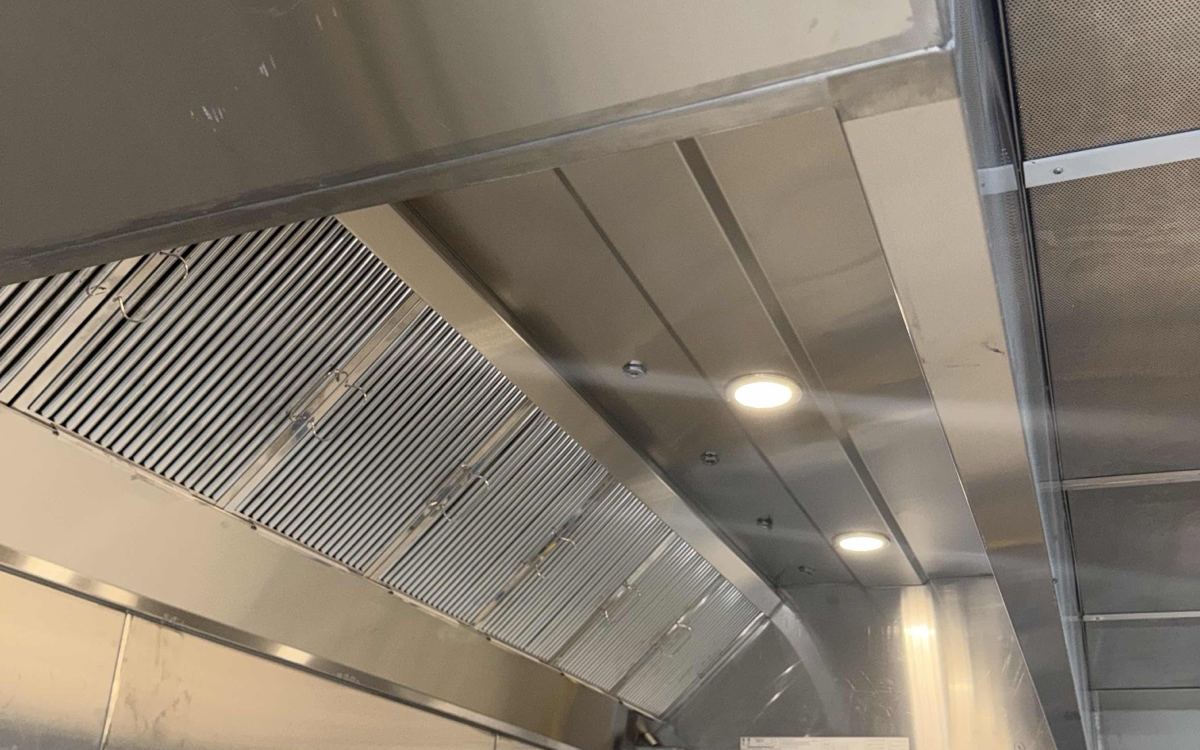
- the hood and exhaust system, through the city's mechanical permit and inspection (see the hoods and exhaust guide)
- the hood fire suppression system, through the fire marshal (see the suppression guide)
- the grease trap or interceptor, through the plumbing or utility office
Dallas asks for a grease interceptor submittal with the construction documents for every food service location that needs a health permit. The TCEQ model standard asks for the trap to be installed and inspected before the certificate of occupancy. That is a model for cities, not a state rule, so check your city.
After you open
- Houston restaurants need a Special Waste Generator permit for grease from the Houston Health Department. See the grease trap guide.
- Fire suppression systems are inspected on a schedule set by the local fire marshal. Houston's is every 6 months.
- Hoods and ducts are inspected for grease on a schedule from NFPA 96, which your fire marshal confirms. See the hood cleaning guide.
- Used fryer oil has its own rules. See the used cooking oil guide.
Alcohol
TABC issues alcohol licenses and permits, so alcohol questions go to TABC.
Building or remodeling a Texas restaurant is its own choice on the form, and the request goes to the number of local companies you choose (one to five).
Questions
Do I need a permit to open a restaurant in Texas?
Yes. A food establishment permit comes from your local health authority, or from DSHS where no local health department exists.
Do I have to submit plans to open a restaurant in Texas?
The health authority may require plans for new construction, conversions and remodels. The Food Code asks for them before work starts. Ask your health department.
Is there a statewide fire code for restaurants?
No. Cities adopt the fire code edition and the amendments they enforce. Ask your city fire marshal which applies.
Who inspects a Texas restaurant before it opens?
The health authority may do a pre-opening inspection to check the kitchen against the approved plans. The fire marshal and building inspectors have their own inspections.
Sources
- DSHS, Retail Food Establishments
- DSHS, permits for retail food establishments
- DSHS, local ordinance and fee schedule registry
- 25 TAC 228.1, purpose and adoption of the Food Code
- 25 TAC 228.241, plans
- 25 TAC 228.243, pre-opening inspections
- FDA Food Code 2017, sections 8-201.11 and 8-201.12
- Houston Health Department, food permits
- Houston Health Department, special waste generators
- Houston code development, 2021 Houston Construction Code
- Dallas current city codes
- Dallas grease interceptor submittal guidelines
- TCEQ model FOG standard
- Houston Fire Department LSB Standard 02
- TABC